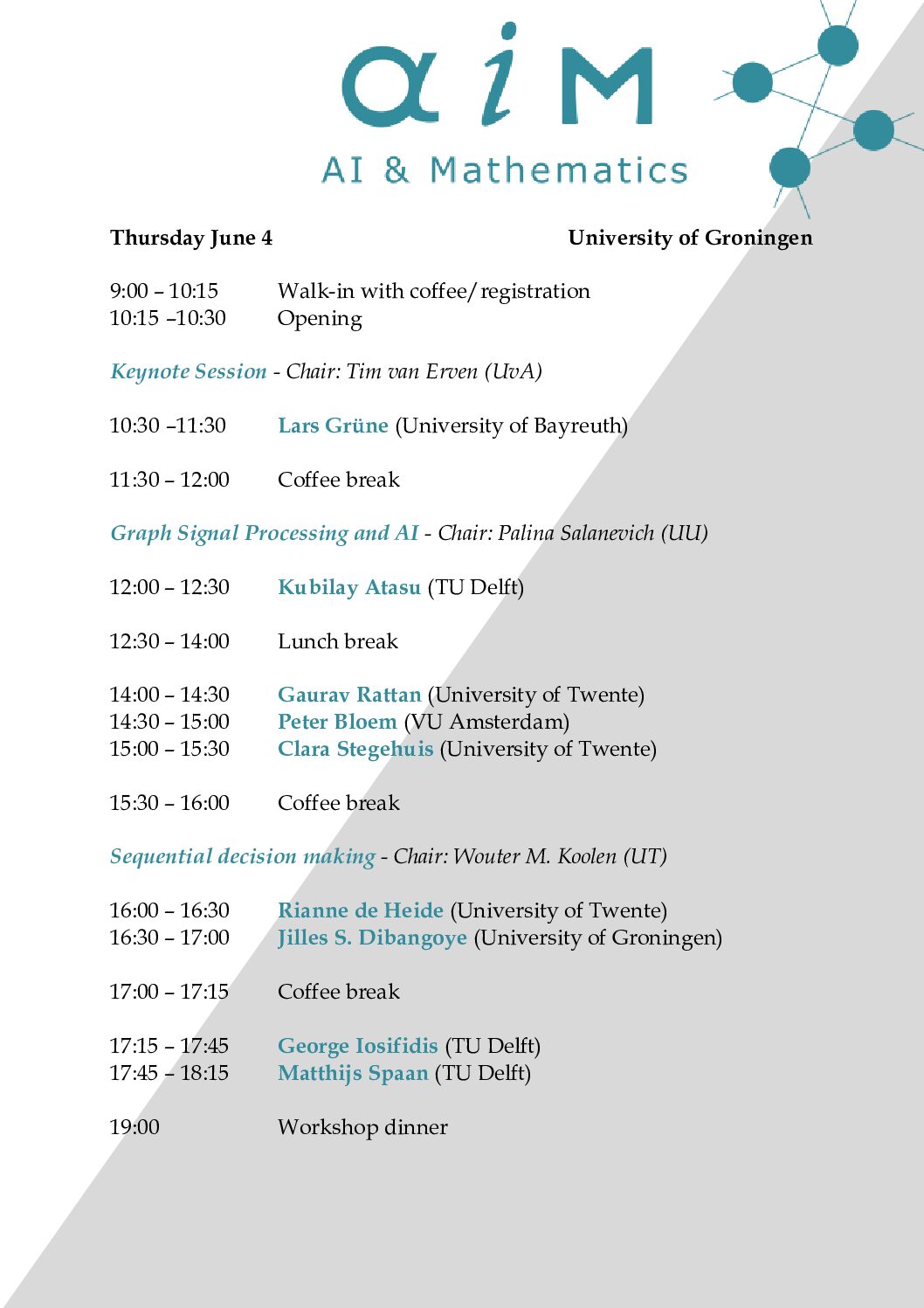
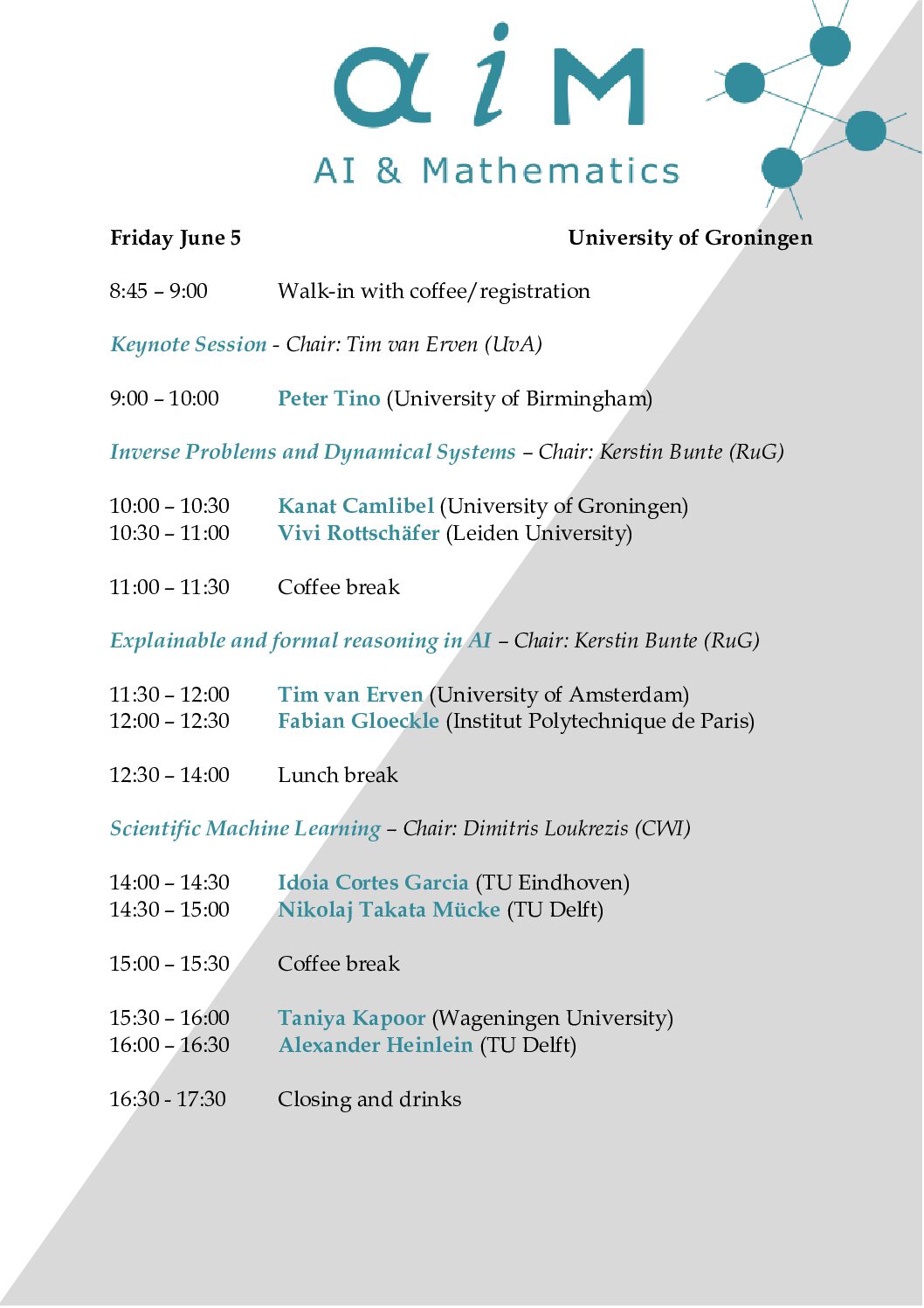
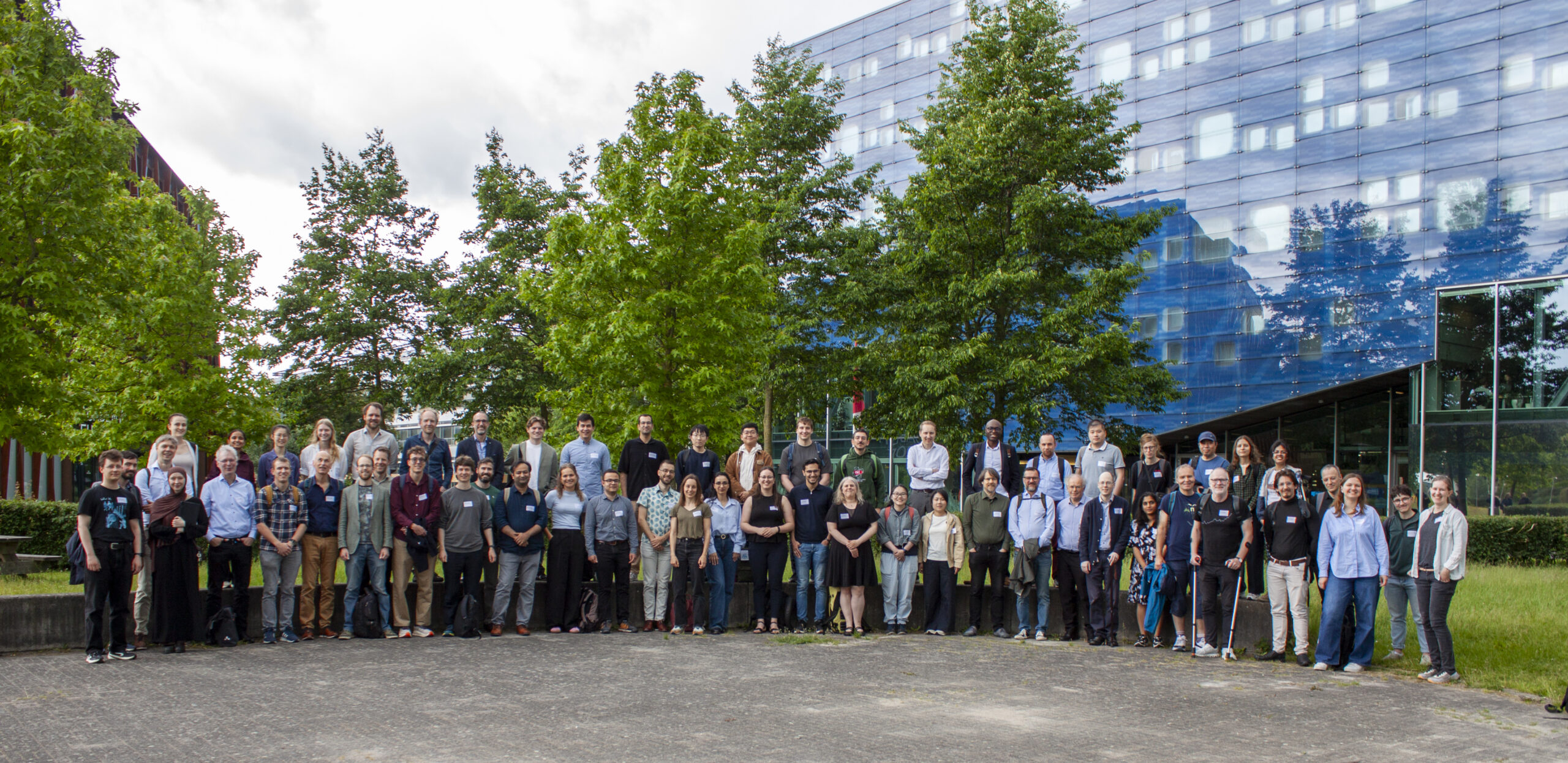
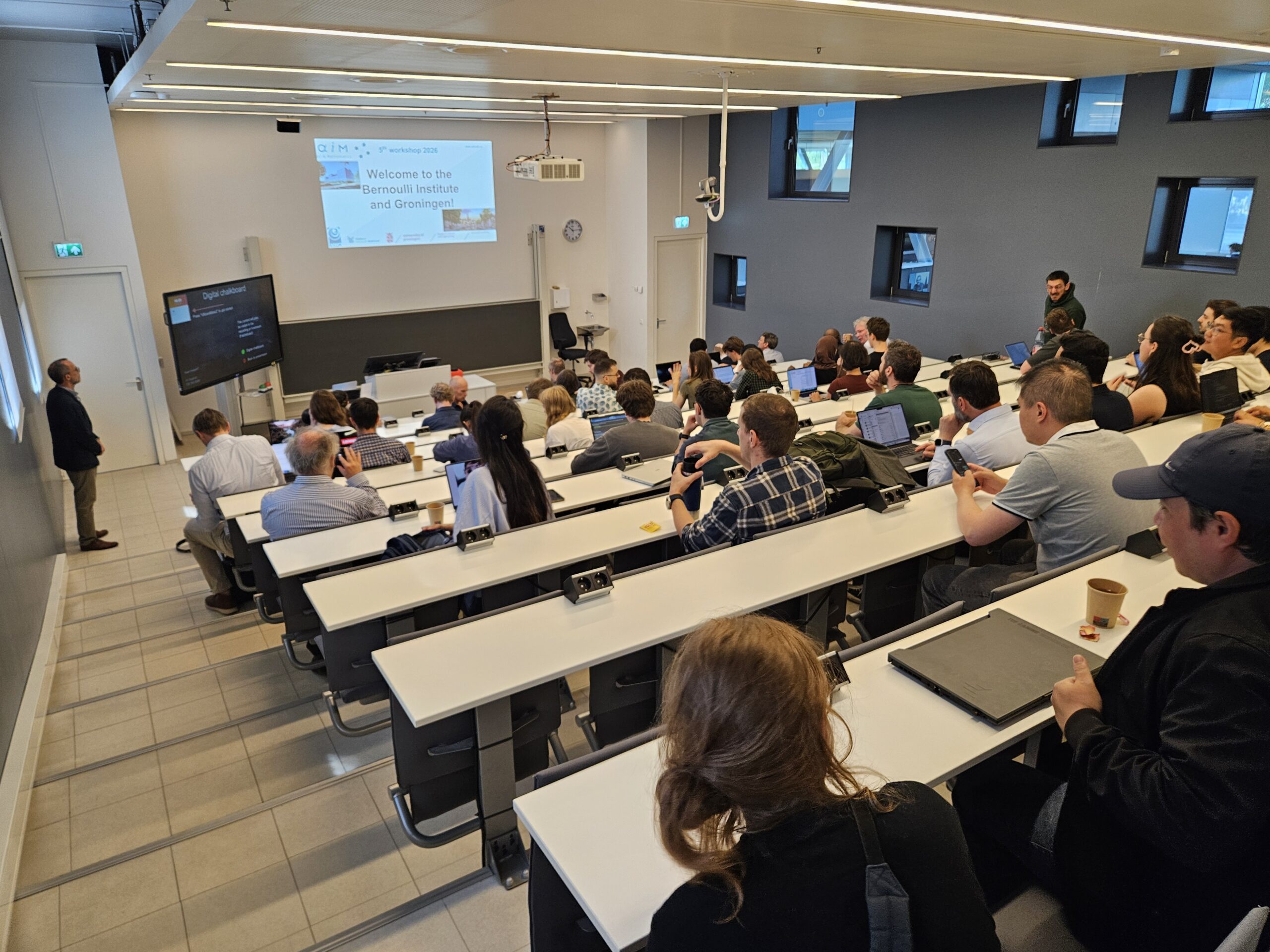
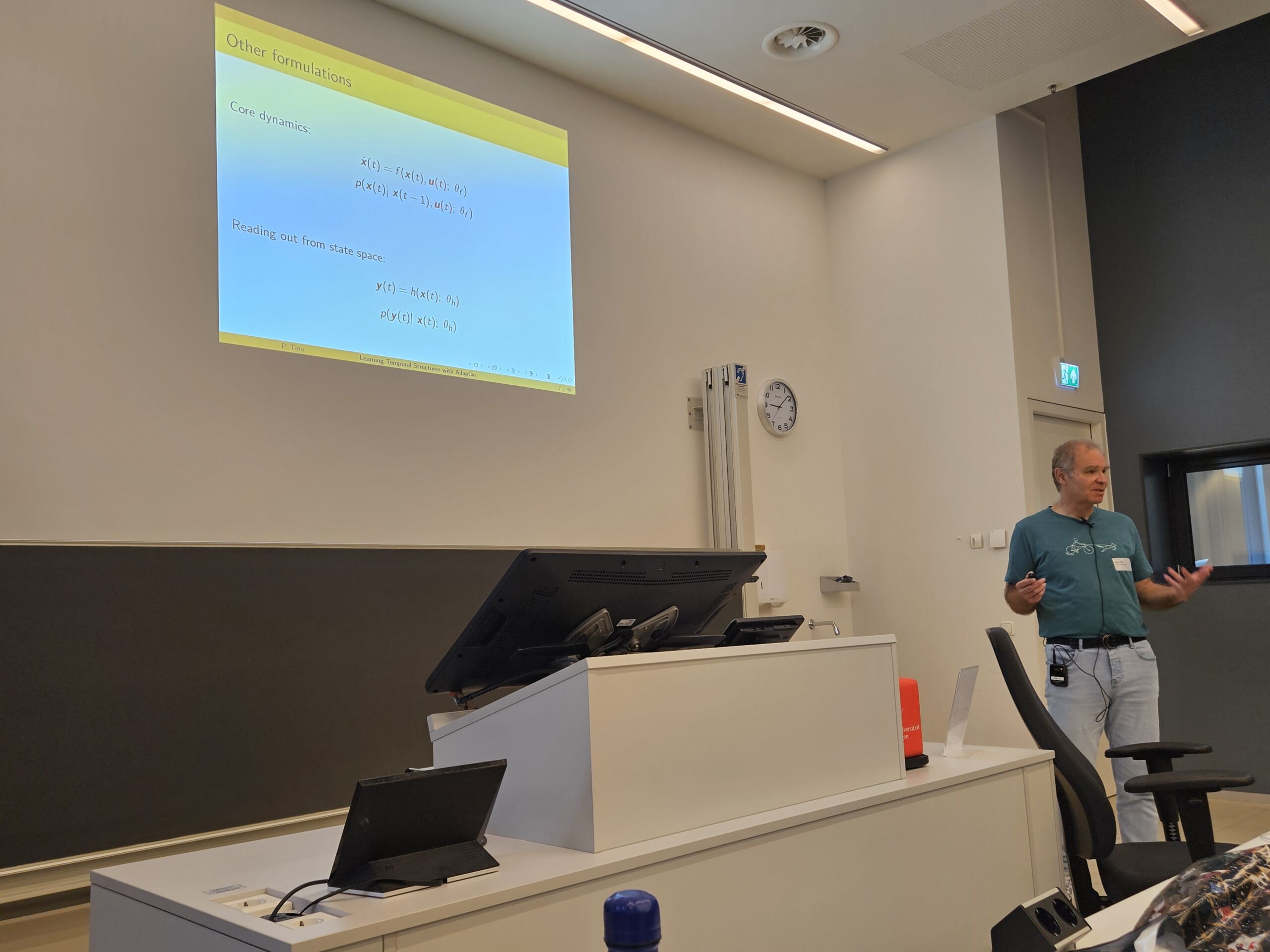
On June 4-5, 2026 the 5th workshop on Mathematics and AI – connecting the mathematics clusters is taking place at the Universtity of Groningen.
Whether you’re a researcher, student, or industry professional, this workshop is a great opportunity to learn about the latest developments in AI and mathematics, and connect with peers and experts in the field.
Over the course of two days, thematic sessions will highlight connections between the different clusters and provide opportunities for networking and collaboration.
If you have any questions about the workshop, please do not hesitate to contact us at AIM26@rug.nl.
We hope to see many of you in Groningen!
Registration
Registration is now open. The participation fee is €20 per day, and attendance at the conference dinner is optional at a cost of €50. All fees are payable upon registration.
The registration deadline was May 4th.
Travel Directions
From Groningen Central Station, you can take bus lines 1, 9, or 15 to the “Nijenborgh” stop, which is located directly in front of the building. For up-to-date departure times and travel information, please visit 9292.nl.
You can also find additional information about travel directions and practical details about Groningen and the Bernoulli Institute in this brochure.
The workshop dinner (for participants who registered for it) will take place on Thursday at 19:00 at ’t Feithhuis (Martinikerkhof 10, 9712 JG Groningen).
Keynote Speakers
chair: Tim van Erven (University of Amsterdam)
The workshop will feature plenary talks by
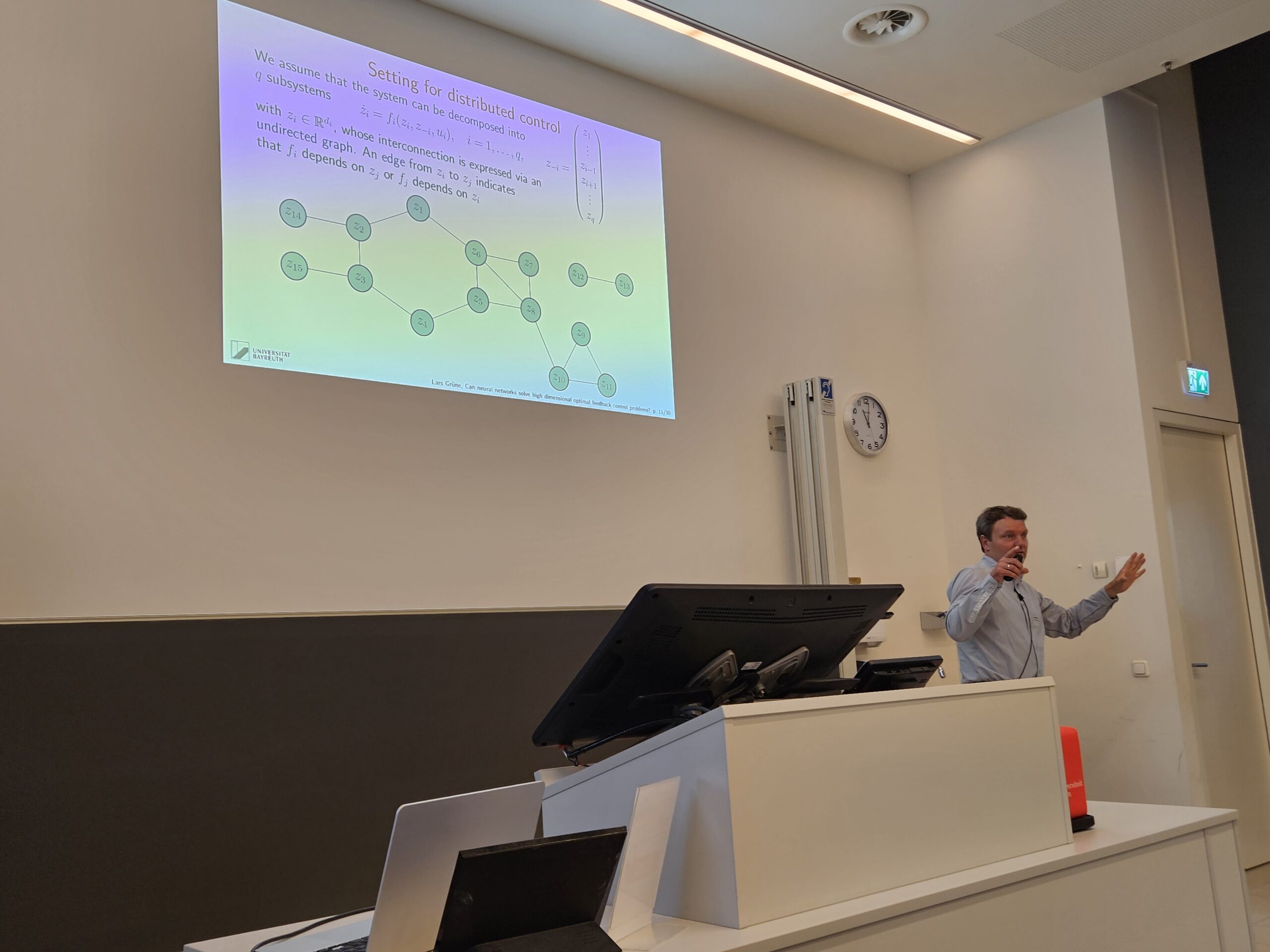
- Lars Grüne (University of Bayreuth)
- Peter Tino (University of Birmingham)
Four Thematic Sessions
1. Graph Signal Processing and AI, session chair: Palina Salanevich
Graph signal processing (GSP) is a new and thriving area in mathematical data science that aims to develop analysis tools and reconstruction techniques for data supported on graphs, including social and economic networks, brain imaging, epidemiology, and traffic networks. In this session, we will discuss how the tools developed in GSP can be applied to process, analyze, and visualize large-scale structured data in machine learning.
2. Sequential Decision Making, session chair: Wouter M. Koolen
Sequential decision making is a thread connecting many areas of learning theory, including online optimization, active statistical testing, bandits, reinforcement learning, solving of games.
3. Inverse Problems and Dynamical Systems, session chair: Kerstin Bunte
Inverse problems and dynamical systems focus on reconstructing and understanding evolving processes from limited or noisy data. Inverse problems infer hidden parameters from observations, while dynamical systems describe how those parameters govern time-dependent behaviour. This session explores how combining these fields with modern AI techniques enables more accurate prediction, robust control, and deeper analysis of complex real-world phenomena.
4. Scientific Machine Learning, session chair: Dimitris Loukrezis
Scientific Machine Learning (SciML) is a relatively young field that merges traditional scientific computation with machine learning (ML). Its goal is to develop novel methods that combine physics-based knowledge in the form of, e.g., mathematical equations and physical properties, with data-driven, ML-based modeling. In this section, we will discuss methodological developments and applications of SciML in mathematics, physics, and engineering.
Program